

What makes this course unique?
This Foundation degree equips students with the skills, knowledge and confidence to tackle some of the most pressing challenges of our time – biodiversity loss, habitat degradation, and the climate crisis. Blending up‑to‑date academic rigor with real‑world application, we prepare graduates to make meaningful contributions in applied ecological sciences, such as managing, conserving and restoring ecosystems.
With almost 50 years of expertise, we are well‑established in wildlife conservation education, supported by strong partnerships with top local employers.

Qualification: Level 5
Level of Study: Undergraduate
Duration: 2 year
UCAS Code: C18M
Institution Code: S34
What you’ll learn
You will gain a deep understanding of ecological systems, conservation science and sustainability. Topics such as ecosystem services, species monitoring and biodiversity management are paired with practical skills like species and habitat identification, mapping, ecological data analysis, and project management planning.
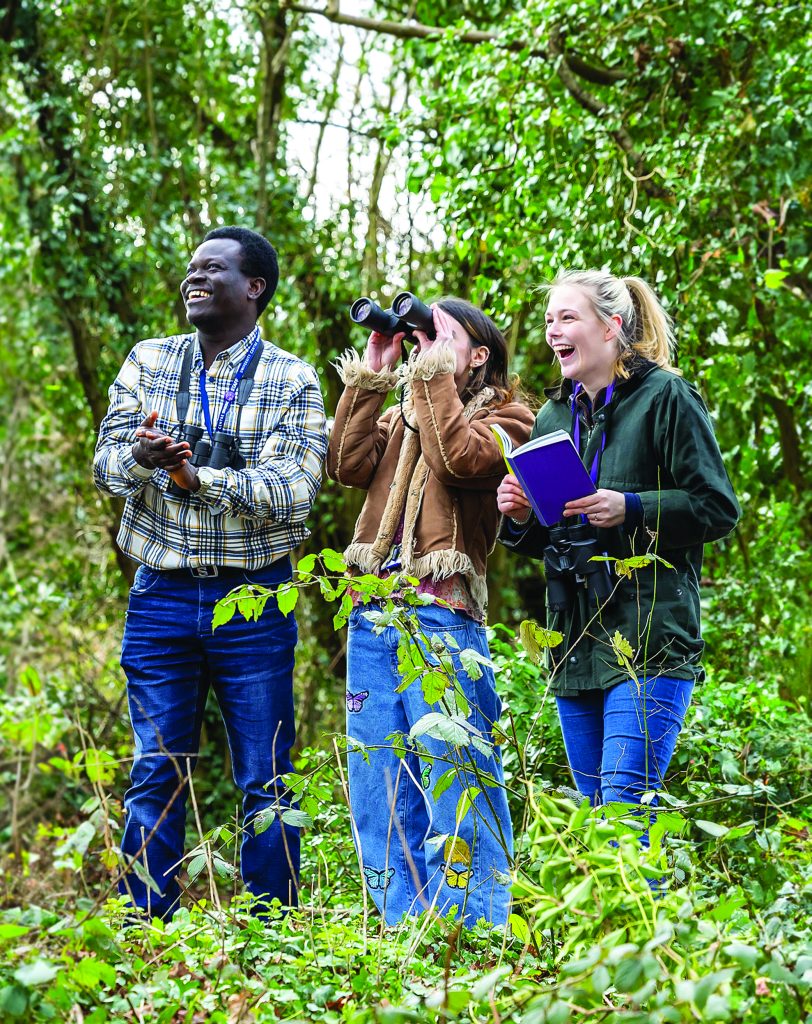
Conduct wildlife surveys and habitat assessments, develop habitat management plans, participate in fieldwork on campus or at externally managed conservation sites and contribute to live research projects, such as monitoring butterfly populations, avian species richness and diversity monitoring, dormouse and other small mammal monitoring.
Modules
YEAR ONE – SOLID FOUNDATIONS
- Introductory Ecology
- Global Ecosystems
- Habitat and Species ID
- Fundamentals in Science
- Industrial Experience
- Academic Skills
YEAR TWO – GET JOB-READY
- Applied Ecology
- Conservation Land Management
- Field Ecology Techniques
- Conservation Legislation and Policy
- Industrial Development
- Applied Industrial Research
How you’ll be assessed
Our assessments mirror the challenges you will face in your career, combining academic depth with practical application:
- Field‑based assignments allow you to showcase your skills to employers
- A range of presentation types and written assignments that develop key graduate skills such as communication expertise.
How you’ll be taught
Contact time: Three days per week plus independent study time.
Entry requirements
A Level: Two A Level passes, including one at grade C or above, one of which should be in a science
BTEC Ext. Diploma: MMP
City & Guilds Advanced Technical Ext. Diploma (1080): MMP in a relevant pathway
BTEC Diploma: MM
City & Guilds Advanced Technical Extended Diploma (720): MM in an appropriate pathway
T Levels: Pass in a relevant subject
Access to HE: A satisfactory pass in a relevant Access course with 74
tariff points, with 24 credits at merit or above including 12 credits in science‑based units
International Baccalaureate: Appropriate IB Certificates considered
Plus GCSEs in Maths and English at grade 4/C or above or Level 2 Functional Skills in Maths and English.
The Connected Curriculum – A modern, flexible and supportive learning experience designed for your future
Access to Higher Education
Thinking about studying a degree but want to build your academic skills first? Our one‑year Access to HE courses can help you get there offering a great platform for mature learners to gain the skills and qualifications needed to continue onto land-based or veterinary sciences degrees in the future.
Key Information

Fees & Finance

Student life

Accommodation

Transport
