

What makes this course unique?
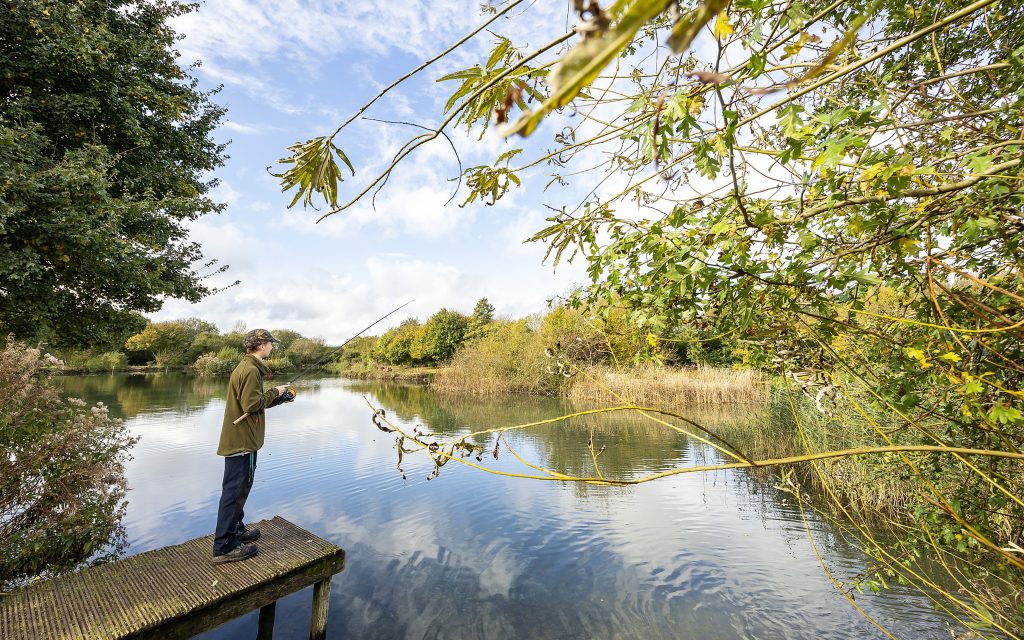
An industry relevant course, the degree equips students with the skills and knowledge to enter fishery management, aquaculture production and several fish related industries. Combining practical and academic skills the course prepares graduates to contribute to the fast‑growing aquaculture and fisheries industry.
Students gain access to extensive innovative technology and the opportunity to undertake industry related placements with our excellent sector links.
Qualification: Level 6
Level of Study: Undergraduate
Duration: 3 year
Sandwich Year: Optional additional one year industry placement available
UCAS Code: D480
Institution Code: S34
What you’ll learn
Gain a wide range of knowledge in subjects such as fish anatomy and physiology, business and environmental management and aquaculture through a combination of practical and theoretical sessions.
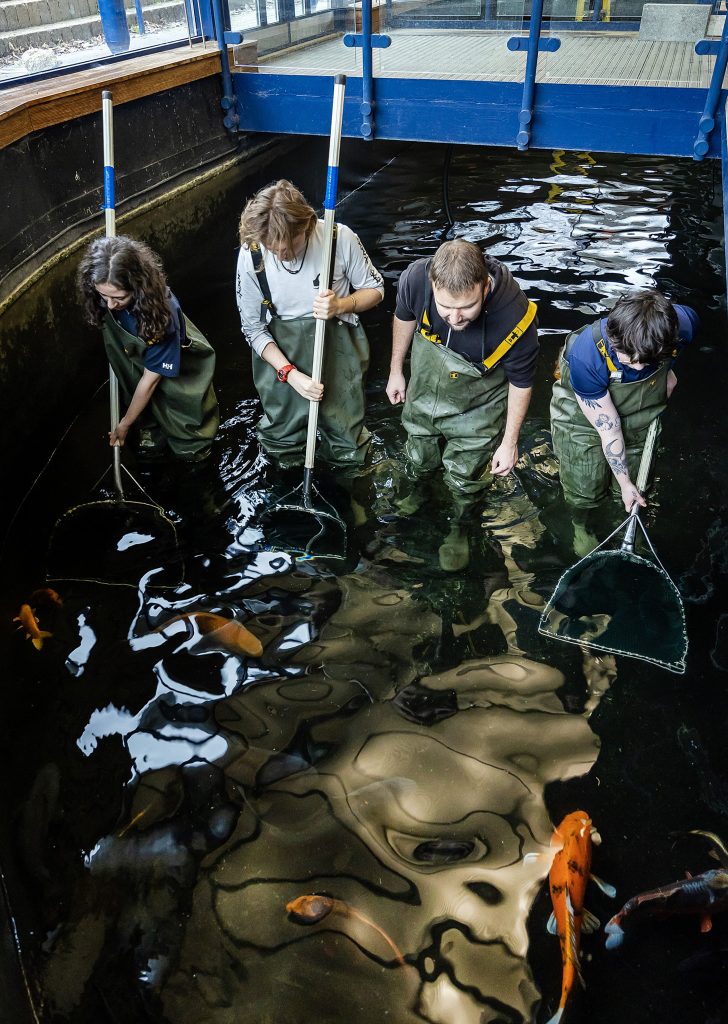
Contribute to industry research furthering our understanding of fish nutrition, participate in fieldwork comparing and contrasting industry site visits, and explore grading and spawning of fish in both our aquatic centres to further the genetics of our broodstock.
Modules
YEAR ONE – SOLID FOUNDATIONS
- Principles in Aquatic Science
- Fishery Science
- Introduction to Fisheries Management
- Salmonid Aquaculture
- Industrial Experience
- Academic Skills
YEAR TWO – GET JOB-READY
- Marine Fish Farming (Optional)
- Aquarium Design and Husbandry (Optional)
- Financial Studies
- Fishery Appraisal
- Fish Health and Nutrition
- Tropical Aquaculture
- Industrial Development
- Statistics and research methods
YEAR THREE – EMBRACE CHALLENEGE
- Applied Fishery Science
- Development of Fish Production and Processing
- Environmental Management
- Enterprise and Management
- Dissertation and Data Analysis
- Professional and Industrial Development
How you’ll be assessed
Our assessments mirror the challenges you will face in your career, combining academic depth with practical application:
- Research that addresses real‑world problems
- Field‑based assignments that allow you to showcase your skills to employers
- A range of presentation types and written assignments that develop key graduate skills such as communication expertise.
How you’ll be taught
Contact time: Three days per week plus independent study time.
Entry requirements
A Level: Three A Level passes, including two at grade C or above, one of which should be in a science
BTEC Ext. Diploma: DMM
City & Guilds Advanced Technical Ext. Diploma (1080): DMM in a relevant pathway
BTEC Diploma: N/A
City & Guilds Advanced Technical Extended Diploma (720): N/A
T Levels: Merit in a relevant subject
Access to HE: A Merit profile in a relevant Access course with 96 tariff points including a minimum of 15 credits at merit in science-based units
International Baccalaureate: 24 points with HL Science at 4
Plus GCSEs in Maths and English at grade 4/C or above or Level 2 Functional Skills in Maths and English.
The Connected Curriculum – A modern, flexible and supportive learning experience designed for your future
Access to Higher Education
Thinking about studying a degree but want to build your academic skills first? Our one‑year Access to HE courses can help you get there offering a great platform for mature learners to gain the skills and qualifications needed to continue onto land-based or veterinary sciences degrees in the future.
Key Information

Fees & Finance

Student life

Accommodation

Transport
