

Our working farm is set within 126 hectares of Hampshire countryside, as well as a further 134 hectares at another site. This provides a real work environment for training and skills development. There are a number of farm units that operate on a commercial basis and students undertake regular farm duties as part of their course.
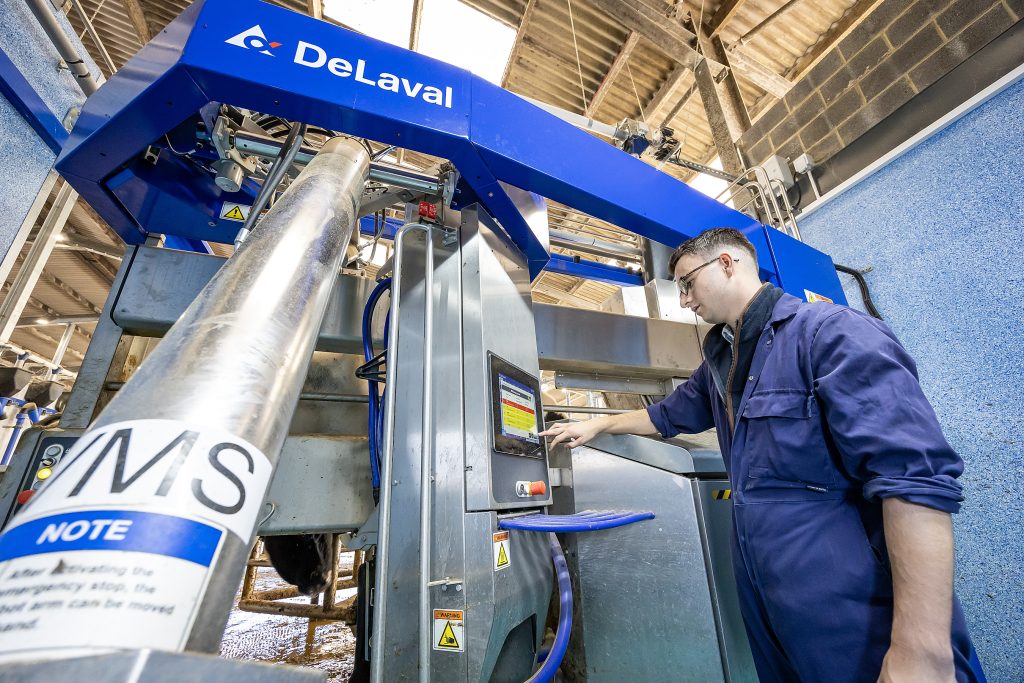
Significant investments have been made to enhance our facilities, including a state-of-the-art DeLaval robotic parlour, a brand-new traditional conventional parlour, and a ground-breaking vertical growing environment, ensuring students gain experience with the latest advancements in agricultural technology. Additionally, the new AgriTech Centre provides a cutting-edge learning environment, featuring two laboratories, modern classrooms, and an extensive variety of livestock husbandry simulators.

Enhancing your future
Students are encouraged to undertake challenging and innovative research as part of their course. Our pioneering facilities ensures that our students have a head start in their chosen careers and make them stand out against the
competition when they graduate.
Explore the areas that make up our on-site farm
Beef and Dairy Unit
Beef & Youngstock Unit
The primary goal of the Beef Unit is to maximise the value of calves born to dairy cows. To support this, we have recently invested in a brand-new beef barn, which includes a built-in fixed handling unit and crush, enhancing our facilities and capabilities.
Beef animals of all ages are used to teach cattle handling to students who require it. The calves born are either pure Holstein heifers, raised to reach at least 350kg at service and 500kg at calving or Holstein males and crossbred calves of both sexes.
As an autumn-calving herd, older calves are fattened for market at 16-18 months of age, while later-born calves are reared as stores and sold to local cattle finishers in spring. Additionally, a small suckler herd, established in 2017 from homebred stock, continues to be an integral part of our operation.
Garston’s Dairy Unit
In the ever-evolving world of dairy farming, producers must continuously adapt to remain sustainable. We face the same commercial pressures as the wider industry, including fluctuating milk prices and rising input costs.
To secure the future of milk production at University Centre Sparsholt and maintain the unit as a leading teaching facility, we adapted the herd and transitioned to autumn calving to better align with teaching schedules and term time.
Significant investments have been made to enhance our facilities, including a state-of-the-art DeLaval robotic parlour, a brand-new traditional conventional parlour, and a new dairy barn, ensuring students gain experience with the latest advancements in dairy technology and animal husbandry. Additionally, the new AgriTech Centre provides a cutting-edge learning environment, featuring two laboratories, modern classrooms, and an extensive variety of livestock husbandry simulators.
Although smaller than the average herd, Sparsholt’s Holstein cows consistently rank highly in the Kite Consulting Twice per Day League Table for Southern England.
We are also proud to have our own Sparsholt show team, ‘Sparsholt Holsteins,’ which offers students the opportunity to demonstrate their showing skills at agricultural events throughout the summer. The team competes at local country shows such as the Royal Bath and West Show and the Ellingham and Ringwood Agricultural Society Show, where we are regularly placed highly.
Pig Unit
University Centre Sparsholt takes great pride in its purpose-built pig unit, designed to uphold the highest standards of animal health and welfare. As a member of RSPCA Freedom Food and Farm Assured British Pigs, the unit undergoes regular veterinary monitoring to ensure compliance with rigorous welfare protocols. Every aspect of the facility has been carefully planned to provide the pigs with maximum comfort and freedom, while still operating within a commercial setting.
Recently, we partnered with The Royal Veterinary College to create 360-degree footage of our pig unit. This innovative resource will be used for a variety of educational purposes, including teaching Jordanian Veterinary School student’s essential husbandry techniques.
Our pigs are housed in social groups whenever possible and kept on straw bedding to promote natural behaviours. Piglets have access to a dedicated sleeping area with a heat lamp to ensure their comfort and well-being.
At 28 days old, piglets are weaned from the sow and moved into the weaner house, where they are fed ad lib via an automated feeding system. Their diet progresses through two specialized feed types during their time in this stage.
Once pigs reach 40kg, they transition to the finishing house, where they remain until they reach 100kg. They continue on an ad lib feeding system, and their pens are cleaned regularly to maintain optimal hygiene and welfare standards.
Sheep Unit
The Sheep Unit plays a key role in providing education and training, promoting best practices in husbandry and management, and contributing to the farm’s profitability. Our flock consists of 320 breeding ewes.
We lamb over January/February, giving students the opportunity to gain hands-on lambing experience during term time. This early lambing schedule ensures students develop essential skills before the main lambing season, allowing them to apply their knowledge on external farms during the Easter holidays and work experience weeks.
By lambing in January, we maximise learning opportunities, enabling students to refine their skills in a structured environment before gaining further real-world experience in the commercial sector.
Additionally, around 20 animals are retained into the autumn months for student training and to help manage our grazing areas, efficiently utilising excess grass growth.
We also offer a wide range of short courses for external applicants, including a two-day shearing course, a lambing day experience, and livestock transport training. These courses provide valuable additional skills and can be completed on request by students looking to further enhance their practical knowledge and employability in the industry.
Soil Series
Soils with similar characteristics and derived from similar parent materials are grouped together as a soil series. Four main soil series have been identified at Sparsholt. These are Andover Series, Wallop Series, Winchester Series and Charity Series.
Andover Series
The profile is essentially shallow, brown, flinty loam over chalk and typically it is associated with sloping ground. Usually, it is under arable cultivation with a considerable local variation in soil depth.
Wallop Series
Shallow layer of clay-with-flints overlaying chalk. It occurs typically on convex slopes at the edge of the Winchester Series and also in isolated patches on elevated land surrounded by Andover Series.
Winchester Series
The profile shows brown flinty clay loam to clay, over flinty clay ranging from reddish brown to yellowish brown which will indicate drainage characteristics of the series.
Charity Series
Colluvial material derived from the chalk and clay flints resting on disturbed chalk or brown flinty clay mixed with chalk.
Field Cropping
We have a cropping profile which provides for the needs of the livestock enterprises. Further land off-site provides additional forage supplies, arable cropping for income generation and enhanced fieldwork opportunities for students. Crops include two-year grass leys for growing bulk hay and haylage crops, forage maize, lucerne and forage rye.
Maize
Maize planting commences towards the end of April on land which has received farmyard manure application from our dairy unit. Growing maize also creates field work opportunities for students such as muck spreading, ploughing, cultivation and drilling.
Grassland
Our Farm has a far higher percentage of grassland than would be normal for this area of Hampshire. This is due to the number and variety of livestock enterprises required to support the students in their learning. The grassland can be classified into three broad types: long term, short term and permanent pasture.
Lucerne
Lucerne is grown to provide quality forage for feeding to our dairy herd. Lucerne is high in protein (18-22%), drought tolerant and is cheap to grow. It requires no nitrogen fertiliser and only needs seeding once every 4 years.
OFF-SITE FIELD CROPPING ON OUR ADDITIONAL LAND
Little Buckholt Farm
This 20-hectare farm is approximately 13 miles from the University Centre Sparsholt and is owned by a member of our staff.
Farming Land at Winterslow
Roughly 100 hectares of arable land at Winterslow, near Sailsbury. The need for extra fieldwork opportunities had been identified and this block of land allows us to provide extra field scale tractor driving, as well as generating data for students to use.
Christmas Hill Farm
Approx. 25 hectares of grazing land to expand resources to assist teaching.